整理/王璟瑄 制图/李晗
德性之知
所谓“德性之知”,是指人心发挥作用后所获得的一种超越感官经验的认识,它与“见闻之知”形成对照。张载最早将这两者区分开来。宋代儒家学者认为,人类对生活世界的认知主要依靠两条路径:凭借耳目接触外物而得来的,叫作“见闻之知”;通过内心道德修养提炼出的,则是“德性之知”。这种“德性之知”不依附于感官体验,且层级高于“见闻之知”,被视为对生活世界最本质的把握。
Knowledge from One's Moral Nature
This concept denotes knowledge derived from the mind’s operation, transcending sensory experience and standing in contrast to "knowledge from one's senses." Zhang Zai was the first to draw a distinction between these two forms. Song Dynasty Confucians held that people acquire understanding of their lived world through two distinct channels. What is gained via seeing and hearing constitutes "knowledge from one's senses," while insight forged through inner moral cultivation amounts to "knowledge from one's moral nature." Independent of sensory input, this latter form surpasses the former, offering a fundamental grasp of the world we inhabit.
引例
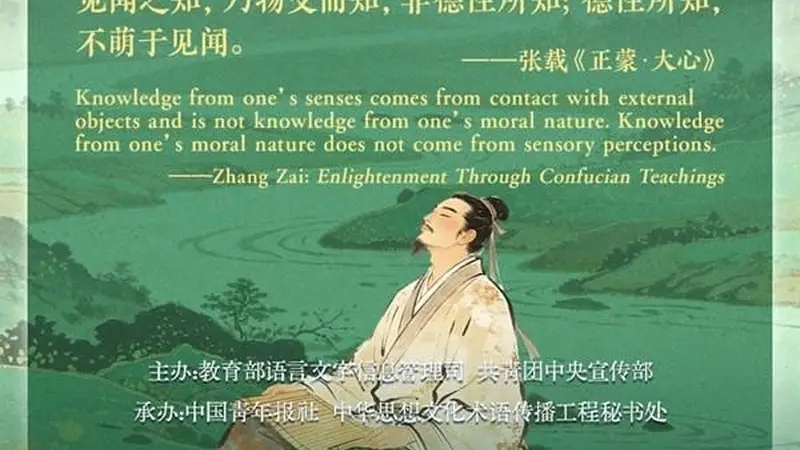
见闻之知,乃物交而知,非德性所知;德性所知,不萌于见闻。(张载《正蒙·大心》)(见闻之知,乃是耳目与外物接触而获得的知识,并不是德性之知;德性之知,不产生于见闻所得的经验知识。)
"Knowledge from one's senses arises from interaction with external objects and differs from knowledge of moral nature; knowledge of moral nature does not originate from sensory perception." (Zhang Zai: Enlightenment Through Confucian Teachings)
王璟瑄 李晗来源:中国青年报
2026年08月06日 01版


