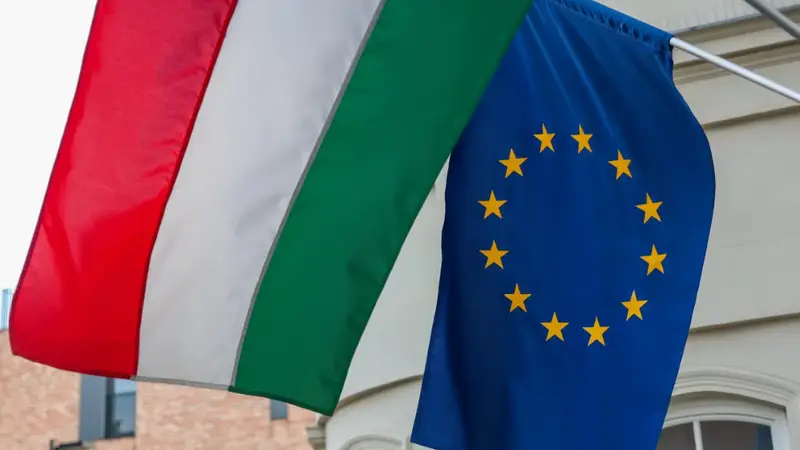
当地时间7月10日,匈牙利提交的新版复苏与韧性计划获得了欧盟理事会的正式批准。据此,匈牙利有望获得欧盟提供的约100亿欧元资金支持,其中65亿欧元将以赠款形式发放,35亿欧元则以贷款形式提供。
这项复苏与韧性计划,构成了欧盟一项大规模的财政支持措施。2022年期间,欧盟以匈牙利在司法改革及反腐措施等方面未能遵循欧盟“法治原则”为由,启动了对其的“条件机制”程序,并暂停了对匈牙利的资金拨付。
匈牙利总理毛焦尔·彼得在社交媒体上公开表示,“即将到位”的欧盟资金,将专项用于交通设施建设、能源系统升级以及医疗体系改进等领域。
匈牙利总理毛焦尔
Hundred billion euros in support funds, initially frozen and then released – what impact will this have on Hungary?
Hungary, long a vocal dissenter within the EU, has been observed to potentially adjust its domestic and foreign policies.
The China Media Group Global News "Flash Review" program interviewed Cui Hongjian, a professor at the School of Regional and Global Governance at Beijing Foreign Studies University, for an analysis.
Question 1: How to view the impact of the EU's financial un冻结 and disbursement on Hungary's economy?
Cui Hongjian holds the perspective that if the hundred billion euros are successfully disbursed to Hungary, it will positively influence the country's economy directly.
Economic current conditions are not favorable: Hungary's actual economic growth rate is projected to be less than 1% for 2025, and the country continues to struggle with high inflation. The overall economic recovery has been weak. Hungarian government has issued warnings that if the economy does not rebound effectively in the short term, the national budget will face severe constraints, with a fiscal deficit as a percentage of GDP possibly surging to 7% in 2026, marking Hungary as the worst fiscal performer in the EU.
EU funds as timely relief: In the context, if the EU funds are smoothly injected into Hungary's economic cycle, it will not only significantly boost market confidence in the country's economic development but also genuinely alleviate the immediate fiscal expenditure pressure on the Hungarian government.
However, nothing in life is free.
With the approval of the new Recovery and Resilience Plan by the EU, this does not automatically mean the funds will be transferred to Hungary. The disbursement of these funds will still be based on a supposed "performance assessment." The criteria not only concern the allocation of EU funds but are also coupled with political conditions.
According to the new Recovery and Resilience Plan submitted by the Hungarian government to the EU in early June this year, in order to secure EU financial support, Hungary will commit to enhancing energy security, including reducing reliance on Russian fossil fuels. Simultaneously, the country will reinforce judicial and anti-corruption reforms, meeting the EU's "super-landmark" target list.
Additionally, these reform processes must be completed by the end of August of this year.
Question 2: What challenges will the Hungarian government face in fulfilling its commitments and advancing related reforms by the deadline?
Hungary Daily News reported
Cui Hongjian posits that in fulfilling commitments and implementing major reforms, balancing and ensuring the stability of Hungarian society and economy will be the greatest challenge for the Matoș government.
Technical adjustments may be swift: In the short term, the Hungarian government's superficial policy micro-adjustments or legislative amendments in response to EU demands are relatively easy to implement and can quickly release positive political signals.
Deep-rooted reforms are arduous: For instance, completely reversing fiscal disbursement models presents significant challenges. For years, Hungarian society has grown accustomed to the government's "universal" fiscal allocations. If the Matoș government does not adjust the former methods and targets of fiscal allocations, it may provoke反弹 from domestic society and public opinion.
Within the EU, some argue that the approval of Hungary's new Recovery and Resilience Plan by the EU essentially reflects the EU's attempt to bring Hungary back into the fold, reducing its leverage in issues such as aid to Ukraine and European defense. This practice of linking fund disbursement with political reforms could lead to the outcome where "pro-EU parties get the money."
Question 3: Whose compromise was it when the EU approved the disbursement of funds to Hungary?
Cui Hongjian analyzes that the EU's decision to unfreeze funds for Hungary stems from a game of interest-based bargaining and mutual compromise at a specific political juncture:
Changes in Hungarian politics create a "political transaction": The direct catalyst for the EU to unfreeze Hungarian funds is Matoș leading the Tisza Party to defeat the long-time EU dissenter Viktor Orbán. Matoș is eager to fulfill his campaign promise to secure the EU funds' unfreezing, while the EU is keen to resolve the thorny "Hungarian issue" in its geopolitical landscape by leveraging his ascension to power. The two sides found common ground quickly.
A "pragmatic compromise" where both sides gain: During negotiations with the EU, the Matoș government utilized the EU's eagerness to bring Hungary back into the Western fold.


